- Lead with Tech
- Posts
- IT vs Technology. A mistake that can cost you.
IT vs Technology. A mistake that can cost you.

Alex Pshenianykov
January 25, 2024
Good morning, 🚀 Ready for some Davos Good News?
We know you missed us last week (or maybe we missed you more), but our curator Alex was off adventuring with polar bears and enjoying hot springs in Alaska, so our usual updates were on hold. But now he's back, and so are we!
So let’s go!

That’s not Alex (he wished). But Alex did take this photo in Anchorage, AK
Digital Transformation Progress Indicator

This week’s global DTP indicator has not moved
Why this score?
Boosters:
AI tackles big issues: Initiatives like disaster preparedness and climate change research showcase responsible applications.
Cybersecurity gets collaborative: Public and private sectors join forces to strengthen national defenses.
Blockchain bursts beyond finance: Diverse use cases in supply chain and identity prove the technology's versatility.
Challenges:
Digital divide remains: Unequal access to tools and skills hampers inclusivity.
Privacy backlash intensifies: Data-driven practices and government surveillance raise concerns.
Talent gap widens: The evolving landscape demands a skilled workforce, and we need to bridge the gap.
ALEX’S TAKE
IT and Technology. What could go wrong?
IT is a bottleneck. Heard that before? I’m hearing it all the time from the CIOs we work with.
Today, let's explore the reasons why IT often fails to deliver on tech initiatives or drive innovation within enterprises. And it's not what you think.
NEXT IN AI
Tech Initiatives run by Countless AI Experts
You've likely heard about OpenAI's new store (if not, here's the link – it's like an AppStore for GPTs). So far, we're not wowed. Each option feels like a bland soup – it's missing the zest, the spice, and that secret ingredient only your mom knew how to add - mama’s love.

However, as we at Techery delve into new frugal tech initiatives for our clients and develop our own AI-driven products like Treel, we've realized that one AI isn't enough. Relying on a single GPT, no matter how well-tuned, limits the value you can add. What's needed is a symphony of expert systems working in concert.
It’s when AI isn't one monolithic entity, but a vibrant ecosystem. Countless models, each honed to razor-sharp expertise, dance in intricate collaboration within one product. A medical diagnostician AI scrutinizes x-rays, while a legal research assistant scours mountains of precedent, both feeding their findings to a courtroom AI crafting the perfect closing argument. Meanwhile, a climate strategist harmonizes with an agricultural AI to optimize sustainable food production.
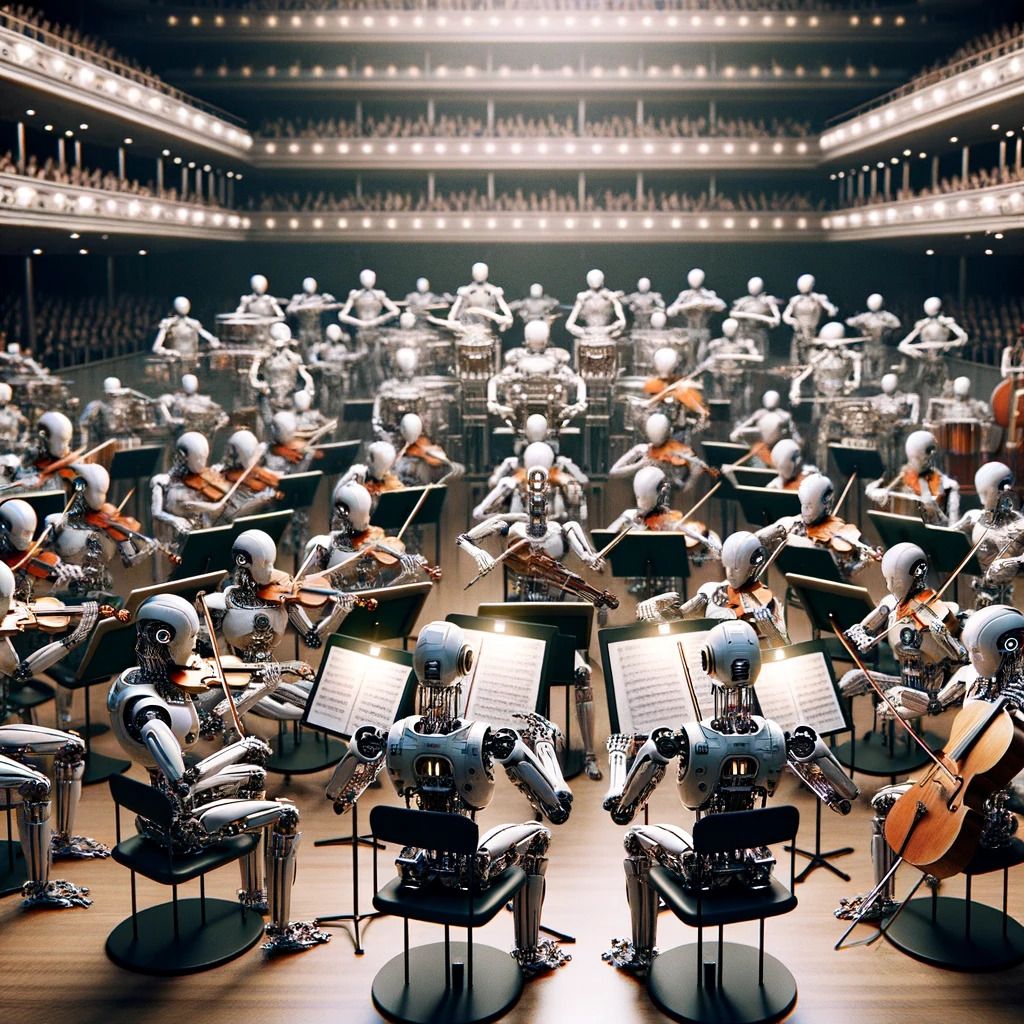
This symphony of experts transcends the limitations of any one "general" AI. It's a world where AI isn't a jack-of-all-trades, but a master of many. Mistakes vanish as experts cross-check each other's work, bias shrinks as diverse perspectives converge, and creativity blossoms as models share insights across disciplines.
But challenges remain. Orchestrating this symphony requires secure platforms for seamless communication and collaboration. Ethical frameworks must ensure each expert adheres to human values, and transparency builds trust in this intricate web of intelligence.
FUTURE OF TECH
This new button is a big deal!
Technically, we should have put it up there in the “Next in Ai” section, because it’s.. well.. yes.. about AI again. But wait.. It’s also about the future of computer technology, so it kind of qualifies.
What’s the most underutilized button on your keyboard? I know for me it’s this one 👇 - I have no idea who ever uses it and why.

But the one button that is almost guaranteed to be used a lot in the next decade (or so they hope) is this one:

Yes, Microsoft has just unveiled a new keyboard featuring a dedicated 'AI' button. Many tech enthusiasts are still unfamiliar with 'co-pilot', let alone having tried it. But as history shows, there are always pioneers and followers.
How will this change our lives? The button itself will have a minimal initial impact: users will initially try to avoid it, then gradually start using it sporadically, until its use becomes second nature, making the 'pre-button' era a distant memory. However, the real transformation won't be due to the button itself, but rather what it represents.
This button is more than a feature; it's a declaration. It's an endorsement that AI is here to stay, and Microsoft is at the forefront. As a result, in 2024 and 2025, the most pressing question for any CIO or VP of Technology will be, 'What's your AI strategy?
And you better have an answer to that.
THIS MADE US LAUGH
Not all heroes wear capes 🤣🤣

📚THIS WEEK’S READ
"The Hard thing about the Hard things" by Ben Horowitz. While focused on startups, "The Hard Thing About Hard Things" offers priceless gems for non-tech CEOs. Horowitz dives past fluffy platitudes into brutal truths of leadership: firing friends, managing egos, cultural warzones. Even in non-tech, the hard parts are hard, and Horowitz equips you to face them head-on.
🎧THIS WEEK’S TUNE
This song by Phosphorescent is captivating. It’s not a typical pop song - that’s for sure (it lasts for more than 6 minutes!). The singer’s voice sounds like he's died and woken up on an unknown shoreline somewhere. The sound is bigger, airier, and more mysterious than anything the band's ever done.

FUTURE OF HEALTH
FDA approved DermaSensor
Recall that film with Matt Damon, set in the future with robots and... well, the details aside. In 'Elysium', there's this futuristic bed, a capsule, that heals any injury or disease. Pretty cool, right? Believe it or not, we might be closer to realizing that kind of healing technology than you think. It all starts with advanced monitoring of course.
Health technology company DermaSensor just received FDA approval for its handheld device that uses AI and spectroscopy to effectively detect the three most common skin cancers (Melanoma, Basal Cell Carcinoma and Squamous Cell Carcinoma) in real time during office visits.

In an FDA study, the device correctly identified 96% of skin cancers, with a 97% chance of correctly ruling out cancer.
The non-invasive device works by shining light on the skin and analyzing cellular patterns with an integrated AI algorithm.
DermaSensor said its device will utilize a subscription model, priced at $199/mo for five patients, or unlimited use at $399/mo.
DermaSensor envisions improving collaboration between PCPs and dermatologists — allowing point-of-care access that can lead to quicker diagnoses and referrals.
Why it matters: The significance of DermaSensor's clearance lies in its potential to transform the early detection of skin cancer, showcasing AI's evolving impact in healthcare. Despite the lengthy 12-year approval process, this breakthrough could (and we hope will) pave the way for an influx of AI-driven medical advancements in the near future.
I hope no insurance, Big Pharma people or politicians read this newsletter. And let’s not tell them where it’s all headed until it’s too late for them to intervene.
CURATED BY
Alex Pshenianykov
founder of Techery
